- Home
- Procedures
- Uterine fibroid embolization (UFE)
minimally-invasive
Uterine fibroid embolization (UFE)
Catheter-based fibroid treatment without hysterectomy. Day procedure, 5-7 day recovery, preserves the uterus. The first-line option that Canadian academic IR offers but provincial referral pathways often don't.
Typical Canadian wait
4–12 months
Canadian private cost
$8,000 – $13,000
Abroad cost (CAD)
$3,500 – $5,500
What it is
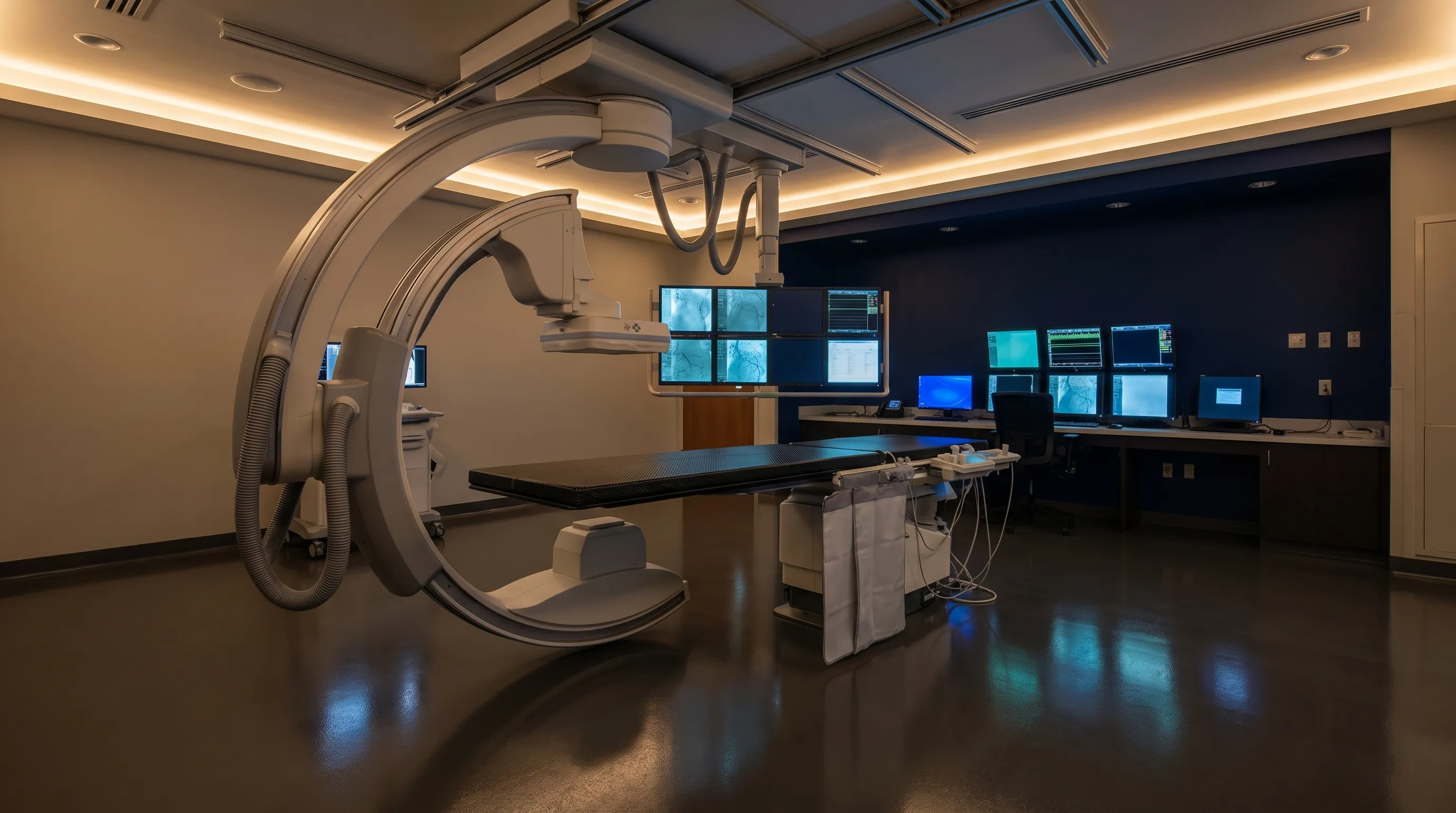
Uterine fibroids affect 20-40% of women of reproductive age. The hysterectomy default remains common in Canada despite international guidelines (ACOG, RCOG) flagging UFE as a first-line option for many cases. UFE is catheter-based: an interventional radiologist navigates from a wrist or groin puncture to the uterine arteries and embolises them. Fibroids shrink 40-60% over six months. The uterus stays.
- Procedure time: 60-90 minutes
- Hospital stay: Day-procedure, occasionally one overnight
- Recovery to fly home: 5-7 days
- Anaesthesia: Conscious sedation
- Pelvic pain: Self-limiting, usually resolved by day 5
Why we offer it
Canadian access is uneven. Several academic centres offer UFE — but provincial referral pathways often default to gynaecology (which leans hysterectomy) rather than to IR (which leans UFE). The two-month wait for an academic-IR consultation, plus another six months for the procedure itself, is more than most patients want to live with active fibroids through.
The offshore math: $3,500-$5,500 vs $8,000-$13,000 private Canadian, with recovery measured in days.
What’s included
- Pre-op review of your imaging + gynaecological assessment
- Coordination with your Canadian gynaecologist (we won’t book without alignment)
- The procedure itself with a named interventional radiologist
- Pain-management protocol for the first 72h
- Embolic-agent specs documented for your home team
- 6-week, 3-month, and 6-month video check-ins (fibroid shrinkage is gradual)
- Continuity letter for your Canadian gynae
When not
- Active pelvic infection.
- Suspected malignancy not ruled out — must be cleared first.
- Severe contrast allergy or significant kidney impairment.
- Pregnancy planned in the next 12 months without gynae alignment.
See also
- [[../blog/keyhole-procedures-pae-and-friends|The most travel-friendly procedure you’ve never heard of]] — covers UFE + adjacent IR procedures.
- [[prostate-artery-embolization|Prostate artery embolization (PAE)]] — operationally analogous procedure for BPH.
FAQ
How does this compare to hysterectomy?
UFE preserves the uterus. For patients who haven't completed family planning — or simply prefer not to have a hysterectomy — UFE is the first-line option international guidelines recommend. The decision is collaborative with your Canadian gynaecologist; we won't book without that alignment.
Will fibroids regrow?
Existing fibroids shrink by 40-60% within 6 months and stay shrunk. New fibroids occasionally develop, same as in any uterus. UFE doesn't preclude future treatments.
Pregnancy after UFE?
Possible but case-dependent. If pregnancy is planned, your gynaecologist's input is required before booking. Some patients are better served by myomectomy in that case.