The most travel-friendly procedure you've never heard of
Prostate artery embolization (PAE) is a 90-minute keyhole procedure that treats an enlarged prostate without surgery, an overnight stay, or a catheter for weeks. It also happens to be a near-perfect medical-tourism case. Here's why.
By No Wait MD · April 30, 2026
The category nobody markets
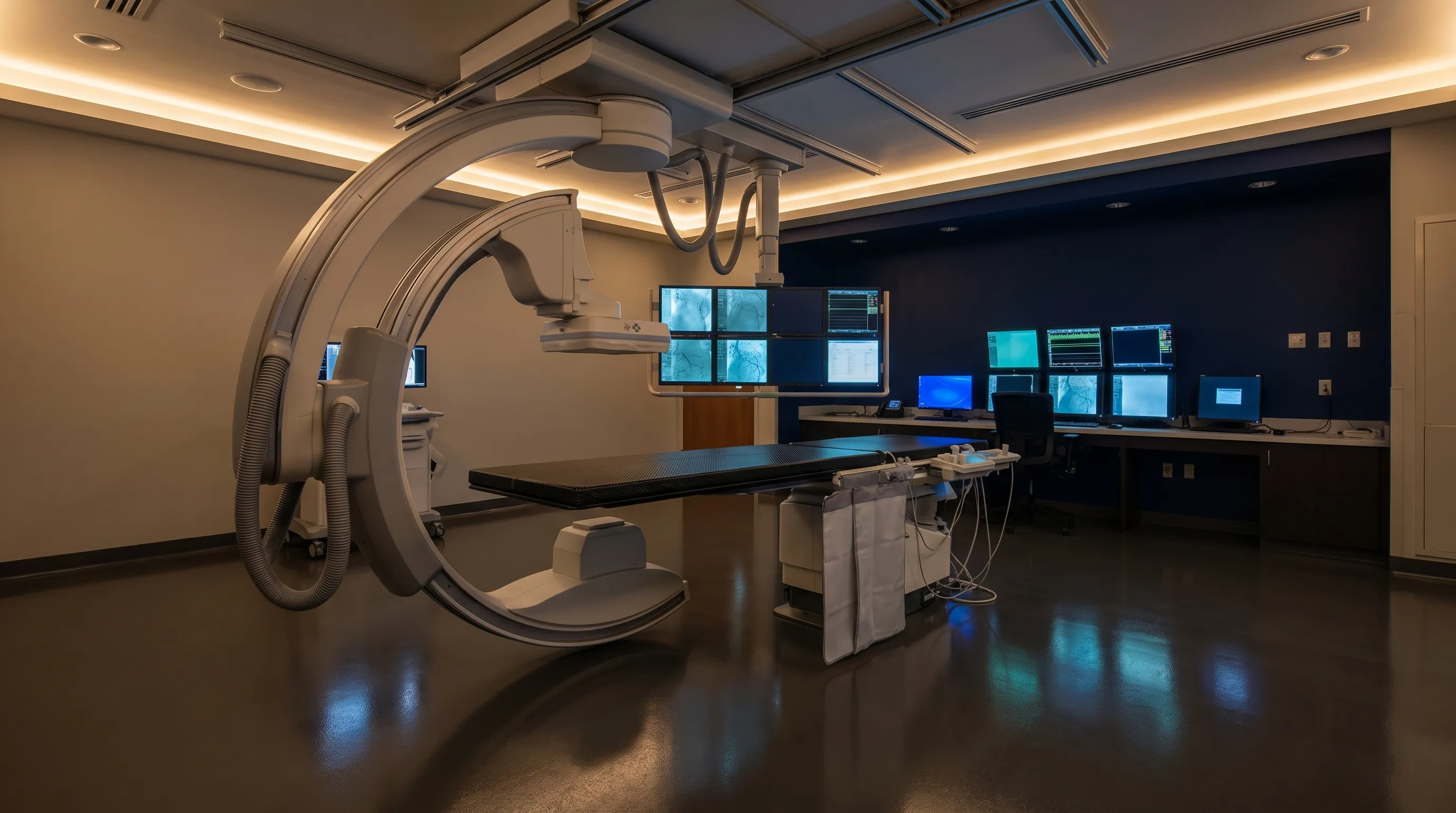
Most medical-tourism content covers two things: cosmetic surgery and major elective surgery (joints, dental, cardiac). The category that gets ignored is the one that arguably fits travel best: interventional-radiology keyhole procedures. Catheter-based interventions performed under fluoroscopy, usually as day-procedures, with recovery measured in days rather than weeks.
The most interesting one for our patient profile right now is prostate artery embolization (PAE).
What PAE actually is
Benign prostatic hyperplasia (BPH) is what happens to roughly half of men over 50 — the prostate enlarges and presses on the urethra, causing frequent urination, weak stream, incomplete emptying, and the night-bathroom-trip parade. The traditional treatments are medication (Tamsulosin, Finasteride and friends — works for some, not others) or surgery (TURP, HoLEP, Rezūm — all effective, all involve a hospital stay and a 1-2 week catheter).
PAE is different. An interventional radiologist threads a catheter from a small puncture in the wrist or groin, navigates to the prostate’s blood supply, and embolises the arteries with tiny inert particles. The prostate shrinks over 6-12 weeks. No incision, no urethral instrumentation, no catheter for weeks.
- Procedure time: 60-90 minutes
- Hospital stay: Day-procedure, occasionally one overnight
- Recovery: Most patients walk normally the next day, fly within 5-7 days
- Complication profile: Low. Self-limiting pelvic pain in some. Rare bladder issues. No retrograde ejaculation (a major TURP downside).
- What it doesn’t do: Replace specialist evaluation. PAE isn’t right for every BPH case.
Why it travels almost perfectly
Compare PAE to a knee replacement:
| Knee replacement | PAE | |
|---|---|---|
| OR / suite time | 90-120 min | 60-90 min |
| Hospital stay | 3-5 days | 0-1 days |
| Recovery to “fly home safely” | 14-21 days | 5-7 days |
| Anaesthesia | General | Conscious sedation |
| Catheter / lines for days | Yes | No |
| Complication rate | 1-3% serious | <1% serious |
| Continuity-of-care complexity | High (PT, hardware, post-op imaging) | Low (a follow-up ultrasound at month 3 is usually it) |
Knee replacements work as medical tourism, but they’re work. PAE is closer to LASIK in operational shape: a short procedure, fast home, light follow-up.
What this costs
| Canadian private | Abroad | |
|---|---|---|
| PAE | $9k-$14k | $4k-$6k |
| Total trip (procedure + flights + 7 nights) | n/a | $5.5k-$8k |
| Wait | 6-14 months* | 2-4 weeks from inquiry |
*Public Canadian PAE access exists at a handful of academic centres — McMaster, UHN, Sunnybrook — but referral pathways are uneven, and several provinces don’t offer it on the public side at all.
Other keyhole procedures in the same shape
PAE is the headline, but the same operational case applies to:
- Uterine fibroid embolization (UFE) — fibroid treatment without hysterectomy. Day-procedure, 5-7 day recovery. Massive Canadian wait problem.
- Varicocele embolization — varicose veins of the scrotum, common reason for male infertility consults. Day-procedure, 3-5 days off.
- Vertebroplasty / kyphoplasty — vertebral compression fractures. Day-procedure, walk the next day.
- Genicular artery embolization (GAE) — knee osteoarthritis pain treatment without joint replacement. Newer; we’re vetting clinics for this through 2026.
What unifies them: catheter-based, image-guided, day-procedure, short recovery, low complication rate. Exactly the profile that makes a case travel-friendly.
The honest “when not to”
PAE isn’t for you if:
- Your urodynamic workup hasn’t been done. We won’t book a PAE without reviewing recent imaging, prostate volume, and a uroflow study. No workup, no referral.
- You have prostate cancer that’s been ruled out only superficially. PAE is for benign disease; PSA + biopsy clearance has to be in the file.
- You can’t tolerate a small contrast load — moderate kidney impairment rules you out.
- You’re hoping for a single-trip total cure. The prostate shrinks over 3-6 months; symptom relief is not next-day.
Same logic applies to UFE, GAE, and the others. The procedure being travel-friendly doesn’t make it appropriate for every patient.
What we send to your Canadian doctor
For any keyhole-IR booking:
- Pre-op imaging review summary
- Procedure record with embolic agent specs
- Post-op imaging (typically a 3-month follow-up ultrasound)
- Symptom-tracking sheet for IPSS / patient-reported scores
- A direct number for your interventional radiologist for 90 days post
Most Canadian GPs and urologists accept this packet readily — the format follows the same conventions used by Canadian academic IR units.
What to do next
If you’re staring at a 9-month wait for a urology consult and you’re losing sleep — literally — to BPH symptoms, send us four fields. We’ll tell you in 48 hours whether your case fits PAE, what your other keyhole options are, and what we’d flag.
Companion read: Inside the vetting process — the 9-step protocol we use to decide whether a clinic ever makes our list.
Considering treatment abroad?
Send four fields, get three vetted clinic options in 48h.